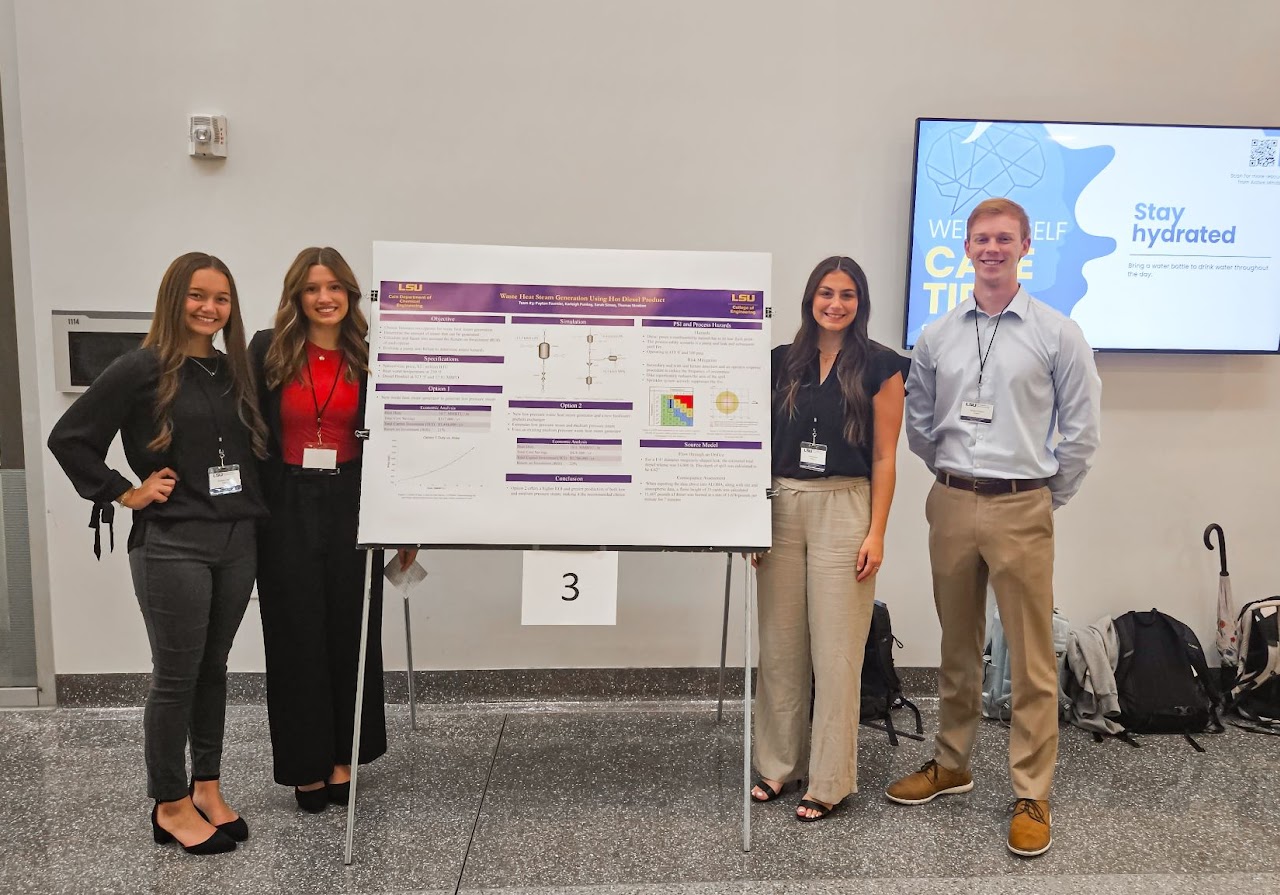
Heat Recovery System Design
Designed a waste heat recovery and steam generation system to improve refinery energy efficiency and reduce fuel consumption.
Louisiana State University - Measurements Lab
Designed and evaluated a waste heat recovery system intended to improve energy efficiency in refinery operations by converting excess process heat into usable steam generation capacity. The project focused on reducing fuel consumption, recovering thermal energy from high-temperature process streams, and improving overall plant utility efficiency.
Using process simulation and engineering calculations, the system was modeled to evaluate steam recovery potential under varying operating conditions and determine the economic feasibility of implementation. The project analyzed how recovered waste heat could offset natural gas demand and reduce utility costs through internal energy integration strategies.
A major component of the project involved evaluating return-on-investment thresholds and identifying operational conditions that maximized energy recovery performance while maintaining process reliability. The design emphasized practical industrial implementation and long-term operational savings.
The project also incorporated process safety and hazard analysis through ALOHA modeling software. Liquid release scenarios and thermal radiation risk zones were evaluated to assess potential operational hazards associated with high-temperature systems and utility equipment. Engineering safeguards and protection layers were then developed to improve process safety and mitigate operational risk.
Key Engineering Concepts
Waste heat recovery
Steam generation systems
Energy efficiency optimization
Utility reduction strategies
Heat integration
ROI and economic analysis
Process safety analysis
Thermal radiation hazard assessment
Industrial utility systems
Tools & Methods
Process simulation software
ALOHA hazard modeling
Energy balance calculations
Economic evaluation
Utility optimization analysis
Safety and risk assessment
Key Outcomes
Designed a waste heat recovery system to improve refinery energy efficiency
Evaluated steam recovery potential and natural gas reduction opportunities
Analyzed economic feasibility and return-on-investment thresholds
Modeled thermal hazard scenarios and developed engineering safeguards
Applied process safety principles alongside energy optimization strategies